

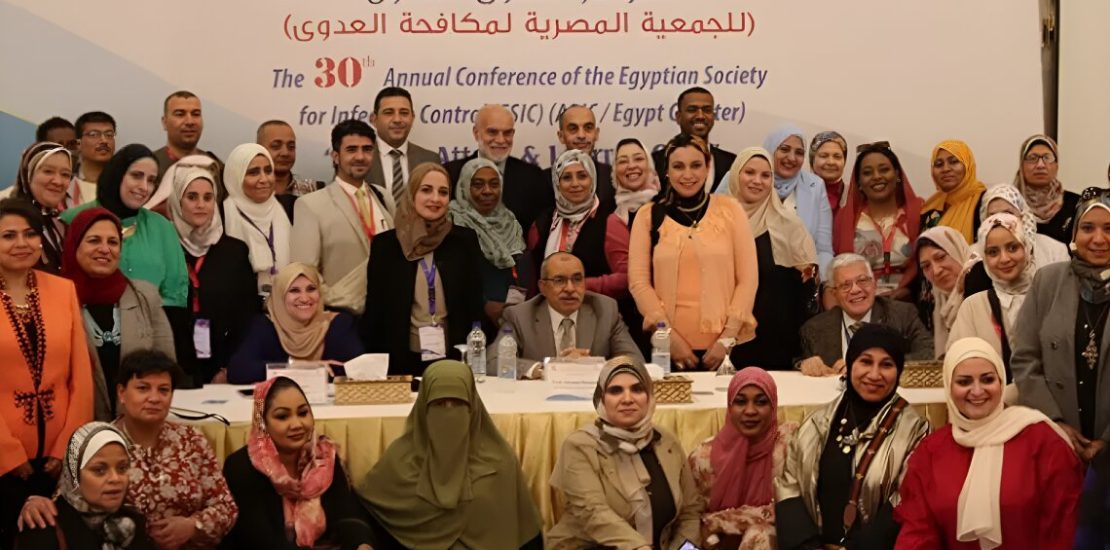
The 30th Annual Conference of the Egyptian Society for Infection Control
Under the patronage of the Arab Medical Union and the World Health Organization (WHO) Egypt Office, the Egyptian Society for Infection Control (ESIC) held its 30th Annual Conference over three days, from November 3 to 5, 2022, under the theme:
“Train to Attain & Learn to Gain”
The conference brought together a distinguished group of local, regional, and global experts in infection prevention and control (IPC), patient safety, and biosafety. It witnessed an extensive attendance, with over 300 participants dedicated to advancing safe healthcare practices.
Opening Ceremony
Chaired by Prof. Dr. Osama Rasslan, President of ESIC, the opening session featured:
- Dr. Salim Abi Asi, President of the Supreme Council of the Arab Medical Union
- Dr. Liz Taylor, representing Dr. Naeema Al-Gasseer, WHO Representative in Egypt
- HRH Prince Abdulrahman bin Mishal bin Abdulaziz Al Saud
Scientific Program Highlights
The conference began with a keynote lecture by Prof. Dr. Osama Rasslan, emphasizing training and continuous learning as the cornerstones of professional development in healthcare.
The scientific program included:
- 5 panel discussions
- 1 debate session
- 2 workshops
Key Topics discussed:
- Innovative training methods and their role in professional development.
- The Arab Accreditation Body for Health Professions Education and its role in ensuring training quality across Arab healthcare systems.
- Health literacy and its impact on public health.
- Antimicrobial resistance (AMR) and Egypt’s collaborative efforts with WHO to combat it.
- Cutting-edge technologies in IPC and associated challenges.
- Economic evidence on how IPC policies reduce direct and indirect healthcare costs.
- HPV awareness, its link to cervical cancer, and the importance of vaccination.
- Biosafety strategies for pandemic prevention, featuring global models from the University of Nebraska and the North Africa Infection Control Initiative.
- Monkeypox: Diagnosis, prevention, and treatment.
- Disinfectant use and the need for evidence-based policies to prevent microbial resistance.
- Reuse of single-use medical devices: Economic pressures, risks, and ethical-legal implications.
- Interdisciplinary collaboration to prevent surgical site infections.
- Combating misinformation during infectious disease outbreaks.
- Climate change’s impact on infectious disease spread.
Conference Recommendations
- Prioritize effective training and modern learning methods (e.g., e-learning) for healthcare workers’ professional growth.
- Ensure accreditation of professional development programs by recognized bodies to guarantee quality.
- Make basic IPC training mandatory for healthcare licensure.
- Strengthen multidisciplinary teams to ensure comprehensive, safe care.
- Expand healthcare economics research, especially amid global financial crises.
- Establish an independent scientific body to unify Arab/African efforts in health security and biosafety, leveraging global expertise.
- Form a national expert committee (clinicians, IPC specialists, engineers, lawyers) to develop evidence-based policies on reuse of single-use devices, prioritizing patient and staff safety.
- Localize production of disinfectants, PPE, and sterilization supplies to ensure supply chain resilience during global crises.
- ESIC reaffirms its commitment to collaboration, knowledge exchange, and advisory support for all stakeholders in advancing safe healthcare.
The conference underscored the critical role of education, innovation, and regional cooperation in building resilient health systems.